
As FoBAH and friends from
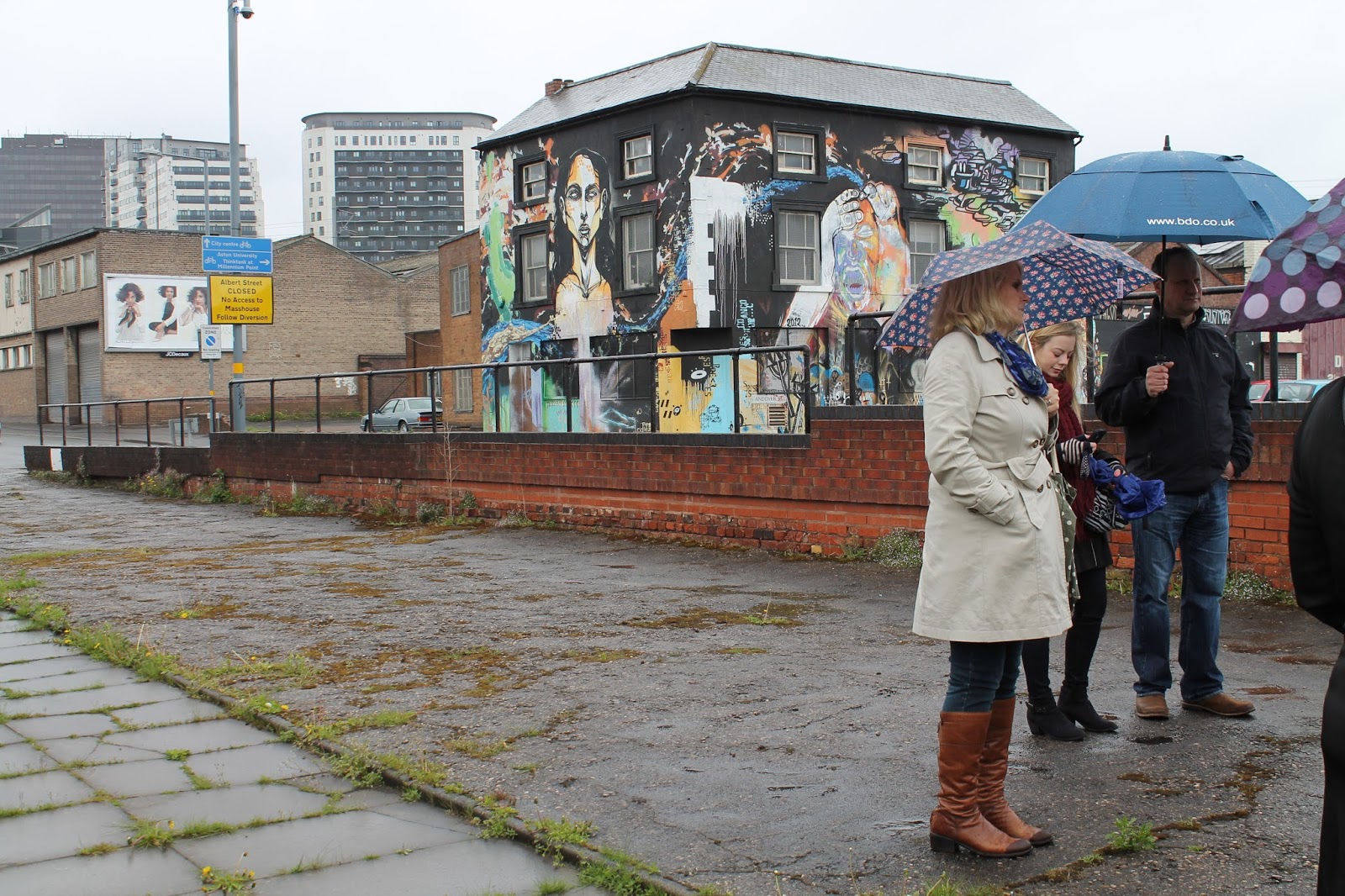
the Digbeth Residents Association gathered at the Custard Factory entrance with
umbrellas at the ready, Chris Upton’s enthusiastic welcome instantly brightened
up our afternoon. Chris is a Senior Lecturer in History at Newman University
and, more recently, has been an advisor for an upcoming TV series, ‘Peaky
Blinders’ based on Digbeth’s historical gangs. The name ‘Peaky Blinders’ is
said to come from the peaked caps that men hid razor blades in for protection.
There are also associations to the caps obscuring a person’s face and thus
reducing the chances of identification. Our walk was guaranteed to be filled
with entertaining anecdotes!

The first leg of our journey took
us to a bridge that crosses the River Rea surrounded by brightly coloured
graffiti. Significantly, this particular point of the river indicates the
geographical division of Birmingham and Aston.


Chris began here with a short
introduction into the various gangs of the 19th, 20th and
21st centuries. He mentioned some of the unusual names that these
might have held such as Burger Bar Gang, Magical Gang, Ghetto Hustler and Slash
Crew. Today’s gangs are hostile over territory and use clothing as visual signs
of affiliation. Gangs of the 20th
century were predominantly formed in factories as opposed to those of the 19th
century which were associated with various streets in Digbeth, for example,
Milk Street, Barn Street and Allison Street gangs. The area was industrious and
many of its workshops can still be seen, although they have now been converted
into artistic studio spaces and flats. Historically, these factory and workshop
environments fostered the formation of gangs according to each trade.


We crossed the canal at several
points on our walk and were reminded at certain cross roads of the pubs that
would have been visible at the end of certain streets. Chris shared some
archival anecdotes of drunken brawls, beatings and sentences that people may
have experienced. Anti-social behaviour was often caused by drunkenness and
there are records of 1000 arrests made in 1914 for drink-associated disorderly
behaviour. As we continued through the wide main streets of Digbeth, we were
also asked to visualise the cramped living conditions of earlier times, where
the spread of diseases was rife. The back to back housing and areas with small
court yards would have encouraged the formation of micro-communities, sometimes
made up of entirely Irish or Italian immigrants.
However, we also encountered
buildings that were put in place to reform the area as an alternative to the
violent behaviour advocated by Digbeth’s many free houses. One such building is
the medical facility on River Street, whose red brick is still very striking
today. It is here that free food was distributed when the economy was down, and
where Bible study classes also ran. Although it closed in 1945 it operated for
about 70 years.


As we reached Minerva Works, an
artist-led studio space by Fazeley canal, Chris gave us a 360 degree snapshot
of the various warehouses that were once in place. He mentioned the Hicks
Slaughterhouse, offices run by canal companies, and the Kyrle Boxing Society
which offered the recreational sport as a way in which people could express
their heritage, identity and ‘otherness’ to each other. The Typhoo Tea factory
still looms over the canal. Although currently vacant and disused, the building
still has its own canal basin. It is impressive to think that, in its heyday,
80 million tonnes of tea were transported each year from Ceylon via London on
this canal.


The lawlessness that was rife in
Digbeth changed with the introduction of Street Commisioners in the 1780s. An
Act of Parliament gave them the power to bring in restrictions which started
with fireworks, climbing trees and throwing stones, especially at funeral
processions. Actions that had been perfectly legal before now became illegal
and unacceptable, and there was a requirement to behave in a certain way in the
city in the eighteenth century.

These new restrictions pushed
crime to the fringes, especially with only 2 police officers for a population
of 50,000! Gangs would assemble on Garison Lane, Pershore Road and bits of
unclaimed land to partake in cock fighting, bull baiting, mass brawls and
pigeon flying because there was no police presence due to confusion over whose
jurisdiction it was. The Street Keepers and Night Watch were required to stick
to the urban city centres, and were often made up of older men who simply
couldn’t chase down the criminals! Birmingham police struggled to control major
offences and riots. One such example of this was in 1839 with the Chartist
Riots or Bullring Riots. The Birmingham police were unable to control the riots
and more officers were sent up from London by train. As the government said
Birmingham couldn’t police itself, a new police force was created in
Birmingham.
We concluded the tour in the car
park behind The London Museum Concert Hall on the corner of Park Street. Built
in 1863, this is the last remaining Victorian music hall and is sadly due to be
knocked down. This place was popular amongst Digbeth gangs and in the later
nineteenth century, gangs would make their money from gambling on horses. This
was true of The Brummagen Boys who were a gang that controlled the South East
race courses. However, they lost control of these after a failed ambush of the Sabini
Brothers and after 23 members of The Brummagen Boys were locked up following
the Epsom Road Battle.


We finished the tour there. Although most of us were soaked
through due to the continual rain, our appetites for Digbeth’s gang history had
been well and truly whetted. We would like to take this opportunity to once
again thank Chris Upton for this wonderfully enlightening and entertaining
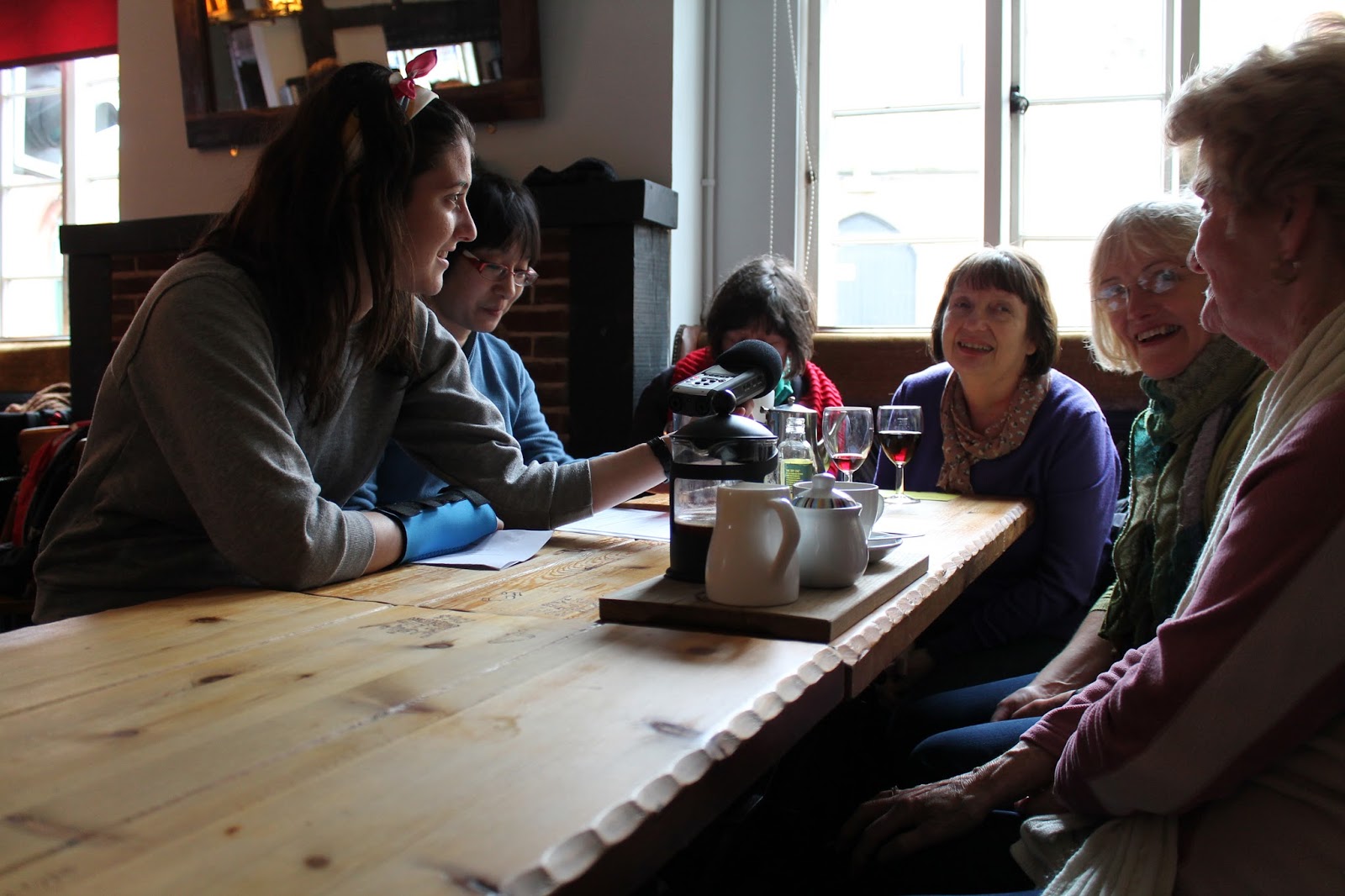
tour. Afterwards we invited everyone back to the Old Crown, where we enjoyed speaking to people about what we had learned, as well as what Digbeth means to them. A further blog post about the walk can be found here.



Marie Giraud & Holly Beaumont-Wilkes


